Showing posts with label covenants. Show all posts

Monday, October 17, 2016

Our Committment to God - October 16, 2016

Hikari led us in a discussion of the Chapter 19 Our Commitment to God.

Abraham and Isaac (Genesis 22)
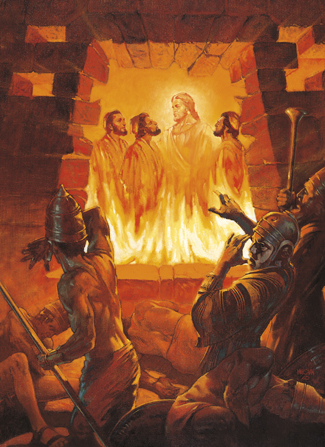
Shadrach, Meshach and Abed-nego in the furnace (Daniel 3)

“Today I finished most of my work at the office. Nearly all of the pending matters are completed. I was alone in the office today with the realization that my practice of law was now at an end. I made notes on a number of files and left them on the desk. … I had a sick feeling as I left the office. I have enjoyed the practice of law and it has been my life for the last number of years, but in spite of this I am pleased and happy to respond to the great call which has come to me in the Church.”2
Elder Hunter knew from personal experience that “submitting to our Father’s will is not always easy.”3 Nevertheless, he knew the importance of being fully committed to God. Concerning that commitment, he wrote: “Most people do not understand why persons of our religious faith respond to calls made to serve or the commitment we make to give our all. I have thoroughly enjoyed the practice of law, but this call that has come to me will far overshadow the pursuit of the profession or monetary gain.” (Our Commitment to God)

As I think of the blessings God has given us and the many beauties of the gospel of Jesus Christ, I am aware that along the way we are asked to make certain contributions in return, contributions of time or of money or of other resources. These are all valued and all necessary, but they do not constitute our full offering to God. (Our Commitment to God)
  • When or how do you evaluate your commitment?
For the families awaiting the coming of Christ in the Book of Mormon, "And it came to pass that they did make a great uproar throughout the land; and the people who believed began to be very sorrowful, lest by any means those things which had been spoken might not come to pass." (3 Nephi 1:7, emphasis added).  It's okay for us to have these moments when our commitment becomes more difficult, we need to move on with faith, pray for courage and an understanding of the plan of salvation for you.
When speaking to the multitudes, the Master said: “Not every one that saith unto me, Lord, Lord, shall enter into the kingdom of heaven; but he that doeth the will of my Father which is in heaven.” (Matt. 7:21.)
As I listen to these words, it seems to me that the Lord is saying, “Just because a person may acknowledge my authority or have a belief in my divine nature, or merely express faith in my teachings or the atoning sacrifice I made, does not mean he shall enter into the kingdom of heaven or attain a higher degree of exaltation.” By implication he is saying, “Belief alone is not sufficient.” Then he expressly adds, “… but he that doeth the will of my Father,” that is, he that works and prunes the vineyard that it may bring forth good fruit. (Our Commitment to God)
  •  Pick something new that makes you DO something to make you a Living Member.
Yes, men and women who turn their lives over to God will discover that He can make a lot more out of their lives than they can. He will deepen their joys, expand their vision, quicken their minds, strengthen their muscles, lift their spirits, multiply their blessings, increase their opportunities, comfort their souls, raise up friends, and pour out peace.  (Ezra Taft Benson)

Wednesday, August 24, 2016

The Sacrament of the Lord’s Supper - August 21, 2016

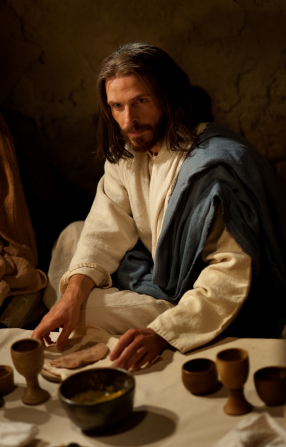
Alex B. taught our lesson using Chapter 15: The Sacrament of the Lord’s Supper from the Howard W. Hunter manual.


We discussed the importance and symbolism of the Passover: the lamb, the blood, the sacrifice.  Christ cleansed the temple and fed the five thousand on different Passovers and of course instituted the sacrament at the Last Supper.

"That is why every ordinance of the gospel focuses in one way or another on the atonement of the Lord Jesus Christ, and surely that is why this particular ordinance with all its symbolism and imagery comes to us more readily and more repeatedly than any other in our life. It comes in what has been called “the mostsacred, the most holy, of all the meetings of the Church” (Joseph Fielding Smith, Doctrines of Salvation, comp. Bruce R. McConkie, 3 vols., Salt Lake City: Bookcraft, 1954–56, 2:340)." (Elder Jeffrey R. Holland, "This Do in Remembrance of Me", October 1995)

A woman had been accidentally missed when the sacrament was passed. Right after the meeting she was invited into a classroom.
"A priesthood holder came in. He knelt down, blessed some bread, and handed her a piece. She ate it. He knelt down again and blessed some water and handed her a small cup. She drank it. Thereafter, Diane had two thoughts in rapid succession: First, “Oh, he [the priesthood holder] did this just for me.” And then, “Oh, He [the Savior] did this just for me.” Diane felt Heavenly Father’s love." ("That I Might Draw All Men unto Me", Elder Dale E. Renland, April 2016)
  • How do you know you are worthy to take the Sacrament?
“For whoso eateth and drinketh my flesh and blood unworthily eateth and drinketh damnation to his soul.” (3 Ne. 18:28–29.)
What does it mean to partake of the sacrament worthily? Or how do we know if we are unworthy?
If we desire to improve (which is to repent) and are not under priesthood restriction, then, in my opinion, we are worthy. (Elder John H. Groeberg, The Beauty and Importance of the Sacrament, October 1989)

Monday, June 20, 2016

True Greatness - June 19, 2016

Sara G. led our thoughts from Chapter 11: True Greatness from the Howard W. Hunter manual.

Muhammad Ali, the legendary boxer, frequently said "I am the greatest!" His biography sits in many libraries.
Have you considered the question: Why do some people have books about them in the library?

The Lord does admonish us to write down our own personal story and to study those of our ancestors. "For the names of the righteous shall be written in the book of life, and unto them will I grant an inheritance at my right hand" (Alma 5:58)
The world’s definition of greatness is often misleading and can prompt damaging comparisons.
  • Are we affected by the world's definition of greatness?  Is popular put above valuable?

“Those things which we call extraordinary, remarkable, or unusual may make history, but they do not make real life.
“After all, to do well those things which God ordained to be the common lot of all mankind, is the truest greatness."

True greatness comes from persevering in the difficulties of life and from serving in ways that are often unnoticed.
True greatness requires consistent, small, and sometimes ordinary steps over a long period of time.

 … Giving consistent effort in the little things in day-to-day life leads to true greatness. Specifically, it is the thousands of little deeds and tasks of service and sacrifice that constitute the giving, or losing, of one’s life for others and for the Lord.

As President Joseph F. Smith has said, “Let us not be trying to substitute an artificial life for the true one.” (Juvenile Instructor, 15 Dec. 1905, p. 753.) Let us remember that doing the things that have been ordained by God to be important and needful and necessary, even though the world may view them as unimportant and insignificant, will eventually lead to true greatness.

The small things are significant. We remember not the amount offered by the Pharisee but the widow’s mite, not the power and strength of the Philistine army but the courage and conviction of David.

"What is my depth but layers and layers of shallow?"  e e cummings

Frequently it is the commonplace tasks we perform that have the greatest positive effect on the lives of others, as compared with the things that the world so often relates to greatness.

But all things must come to pass in their time.
Wherefore, be not weary in well-doing, for ye are laying the foundation of a great work. And out of small things proceedeth that which is great. (Doctrine and Covenants 64:32-33)

To Be of Use by Marge Piercy

The people I love the best
jump into work head first
without dallying in the shallows
and swim off with sure strokes almost out of sight.
They seem to become natives of that element,
the black sleek heads of seals
bouncing like half-submerged balls.

I love people who harness themselves, an ox to a heavy cart,
who pull like water buffalo, with massive patience,
who strain in the mud and the muck to move things forward,
who do what has to be done, again and again.

I want to be with people who submerge
in the task, who go into the fields to harvest
and work in a row and pass the bags along,
who are not parlor generals and field deserters
but move in a common rhythm
when the food must come in or the fire be put out.

The work of the world is common as mud.
Botched, it smears the hands, crumbles to dust.
But the thing worth doing well done
has a shape that satisfies, clean and evident.
Greek amphoras for wine or oil,
Hopi vases that held corn, are put in museums
but you know they were made to be used.
The pitcher cries for water to carry
and a person for work that is real.

Friday, July 24, 2015

Marriage and Family - Ordained of God/The Sacred Callings of Fathers and Mothers

Thanks to Rebecca S. for a great mash-up of two chapters from the Ezra Taft Benson Manual: Marriage and Family—Ordained of God and The Sacred Callings of Fathers and Mothers.  Kind guidance for us as a daughter, wife or mother, if we are now or are preparing to be. I know I've applied many of these to my role as an aunt.  Thanks again Rebecca!

There can be no satisfactory substitute for the home. Its foundation is as ancient as the world. Its mission has been God-ordained.

No nation ever rises above its homes. This Church will never rise above its homes. We are no better as a people than are our firesides, our homes. … The good home is the rock foundation, the cornerstone of civilization. It must be preserved. It must be strengthened.
 
Some people ask me as a Church leader why we place so much emphasis on the home and family when there are such larger problems around us? The answer is, of course, that the larger problems are merely a reflection of individual and family problems. (Marriage and Family—Ordained of God)

The scriptures tell us: “Adam began to till the earth … as I the Lord had commanded him. And Eve, also, his wife, did labor with him. … They began to multiply and to replenish the earth. … And Adam and Eve, his wife, called upon the name of the Lord. … And Adam and Eve blessed the name of God, and they made all things known unto their sons and their daughters. … And Adam and Eve, his wife, ceased not to call upon God.” (Moses 5:1–2, 4, 12, 16.)
 
From this inspired record we see that Adam and Eve provided us with an ideal example of a covenant marriage relationship. They labored together; they had children together; they prayed together; and they taught their children the gospel--together. This is the pattern God would have all righteous men and women imitate. (Marriage and Family—Ordained of God)
  • Have you had times when your two vantage points merged together?
Spiritual growth comes by solving problems together--not by running from them. Today’s inordinate emphasis on individualism brings egotism and separation. Two individuals becoming “one flesh” is still the Lord’s standard. (See Gen. 2:24.) (Marriage and Family—Ordained of God)

"I said what I said and I meant what I said, an elephant is loyal 100%." Horton Hatches the Egg

Be fiercely loyal.
  • How do you create a foundation of support?
Sister Benson acknowledged: “No one is perfect. In our family it is not our objective to magnify each other’s shortcomings, but to encourage one another to improve.” (The Sacred Callings of Fathers and Mothers)

Wednesday, January 28, 2015

Temple baptistry update

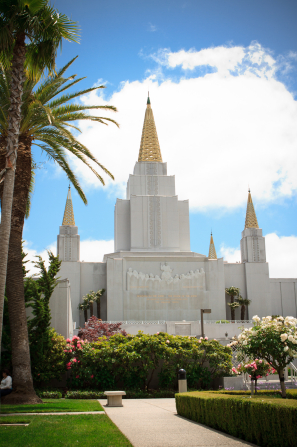
The Oakland Temple has made changes to the scheduling for performing temple baptisms to put priority on families coming to the temple together.

Families can make an appointment or on a first-come basis.

Peak-demand schedule:
Tuesdays, 5pm-9pm :    Family/Walk-ins
Wednesdays, 5pm-9pm: Ward/Stake appointments
Thursdays, 5pm-9pm:    Family/Walk-ins
Fridays, 5pm-9pm:        Ward/Stake appointments
Saturdays, 5:30am-2pm: Ward/Stake appointments
Saturdays, 2pm-5pm:     Family/Walk-ins

The general schedule of the baptistry is:
Tuesdays, 5am-9pm
Wednesdays/Thursdays/Fridays, 7am-9pm
Saturdays, 5:30am-5pm

Patrons are also invited to consider participating at the baptistry during the non-peak demand hours.

Another change is that each ward/branch in the temple district can only schedule one appointment time during the peak-demand times each year. They will no longer be automatically 90 minutes but will instead be based on the number of patrons participating.
Units are invited to provide, when possible, a sufficient number of endowed brothers and sisters to assist in the baptistry.  For the family/walk-in time slots, as well as other times throughout the day, the temple is responsible for providing workers to assist the patrons.

Though ordinances should be performed in the proper sequence, patrons do not need to perform both baptism and confirmation ordinances on the same day.


3:40

Tuesday, October 14, 2014

The temple in our lives - October 12, 2014

Sue A. focused thoughts around the temple with insights from General Conference and Daughters in My Kingdom.
“Miss [Margaret] Cook … one day in conversation with me on the subject of a recent appeal for provisions, clothing, bedding and general supplies for the workmen and their families, remarked that she would be pleased to contribute needlework if it could be made available. I proffered material for her to make up, and suggested that others might feel as we did. We then [discussed] the subject of organizing a sewing society. The object of which should be to aid in the erection of the temple.

“About a dozen of the neighboring sisters by invitation met in my [home] the following Thursday.”

In that era, it was a popular practice for women to form their own organizations, often with constitutions and bylaws--sets of rules to govern the organizations. The women who met at Sarah Kimball’s home decided to establish a constitution and bylaws, and Eliza R. Snow accepted the responsibility to write them. Then the women asked Joseph Smith to review them and give his opinion of them. After the Prophet read them, he said they were “the best he had ever seen. ‘But,’ he said, ‘this is not what you want. Tell the sisters their offering is accepted of the Lord, and he has something better for them than a written constitution. I invite them all to meet with me and a few of the brethren … next Thursday afternoon, and I will organize the women under the priesthood after the pattern of the priesthood.’”
“Something Better”: The Female Relief Society of Nauvoo. Daughters in My Kingdom

Elder Russell M. Nelson taught, “As temples are prepared for the people, the people need to prepare themselves for the temple.”2
  • How do you physically prepare to get to the temple?
Make a date with someone else, lunch, go for 2+ sessions, join with 9a-6p Thursday ladies, trade childcare, go with someone in a similar life phase, work around school schedules, early Saturday morning session gets you can be back by 10am, put it on the calendar early, just go, enjoy the drive, take babysitter with you, offer a ride/meet at church with someone else.
The temple is less busy earlier in the day, earlier in the week and earlier in the month.
  • How do you prepare yourself spiritually?
Listening to lds.org recordings during daily activities; as Moses talked to God we can prepare to ask Him questions, what you bring to the altar.

'In Matthew 25 we read:
“Then shall the kingdom of heaven be likened unto ten virgins, which took their lamps, and went forth to meet the bridegroom.
“And five of them were wise, and five were foolish. …
“[They that were] wise took oil in their vessels with their lamps.
“While the bridegroom tarried, they all slumbered and slept.
“And at midnight there was a cry made, Behold, the bridegroom cometh; go ye out to meet him.
“Then all those virgins arose, and trimmed their lamps.
“And the foolish said unto the wise, Give us of your oil; for our lamps are gone out.
“But the wise answered, saying, Not so; lest there be not enough for us and you: but go ye rather to them that sell, and buy for yourselves.
“And while they went to buy, the bridegroom came; and they that were ready went in with him to the marriage: and the door was shut.
“Afterward came also the other virgins, saying, Lord, Lord, open to us.
“But he answered and said, Verily I say unto you, Ye know me not.”5
I don’t think there is anyone, especially among those with tender hearts, who doesn’t feel sad for the foolish young women. And some of us just want to say to the others, “Can’t you just share so everyone can be happy?” But think about it. This is a story the Savior told, and He is the one who calls five of them “wise” and five of them “foolish.”
As we consider this parable as a pattern for temple preparation, consider the words of a latter-day prophet who taught that “the oil of spiritual preparedness cannot be shared.”6 President Spencer W. Kimball helped clarify why the five “wise” young women could not share the oil in their lamps with those who were “foolish” when he said: “Attendance at sacrament meetings adds oil to our lamps, drop by drop over the years. Fasting, family prayer, home teaching, control of bodily appetites, preaching the gospel, studying the scriptures—each act of dedication and obedience is a drop added to our store. Deeds of kindness, payment of offerings and tithes, chaste thoughts and actions … —these, too, contribute importantly to the oil with which we can at midnight refuel our exhausted lamps.”7
Can you see the pattern of preparedness—drop by drop—that can help us as we think how we might be more diligent in our preparation to receive sacred ordinances for ourselves and others? What other small and simple things might we do to add precious spiritual drops of oil to our lamps of preparation?'
Linda K. Burton, Prepared in a Manner That Had Never Been Known, General Women's Meeting
Jane Clayson Johnson in an interview on the Mormon Channel, described a moment of choice when she chose to be modest and said we can lift others by our own example.
We can be an example.
Monday, September 8, 2014

Planning for a temple marriage - September 7, 2014

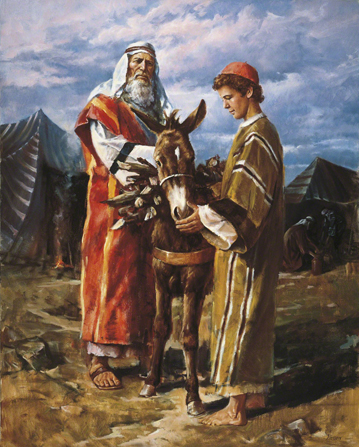
We had the Young Women join us and Wendy P. taught a lesson about the temple and attributes of a good marriage.  Though not all women will marry in this life, there are many principles in the scriptures pertaining to marriage.

And again, verily I say unto you, that whoso forbiddeth to marry is not ordained of God, for marriage is ordained of God unto man. Doctrine & Covenants 49:15

When Wendy was in high school a teacher asked what to look for in a good husband.  Wendy answered, "a good kisser!" Looking back she saw how there were many more important values that a partner should have.

  • What are good attributes to look for in a suitable husband?
Acceptance of who I am, a sense of humor and can laugh at himself, how a son treats his mother, being kind, one who holds the priesthood, honest, trustworthy, puts other's needs before his own.

In the celestial glory there are three heavens or degrees; And in order to obtain the highest, a man must enter into this order of the priesthood [meaning the new and everlasting covenant of marriage]; And if he does not, he cannot obtain it.  Doctrine and Covenants 131:1-3

Even after over 30 years, marriage is still a work in progress.  Once sealed, a couple still needs to keep the commandments, live the gospel, go to church, pray and maintain their relationship.

Elder Russell M. Nelson said, "a temple marriage is not only between husband and wife; it embraces a partnership with God." (Celestial Marriage, October 2008 General Conference)
  • What can you be doing to be temple ready?
Go to the temple often and build your relationship with God.

Thanks for a great lesson Wendy!

Thursday, August 7, 2014

Lesson Summary: August 3, 2014


Katie S. gave a wonderful lesson on following the 
"covenant path"

She referenced the following 4 talks for her lesson:
A Priceless Heritage of Hope by President Henry B. Eyring
Daughters in the Covenant by President Henry B. Eyring


Highlighted in this scripture are the joys of following the covenant path.
20 Wherefore, ye must press forward with a steadfastness in Christ, having a perfect brightness of hope, and a love of God and of all men. Wherefore, if ye shall press forward, feasting upon the word of Christ, and endure to the end, behold, thus saith the Father: Ye shall have eternal life.

"As women of all ages, we walk in His light. Our journey on the path is personal and well lit with the Savior’s love". Rosemary Wixom

Think about the different covenants you have made and how you felt:
Nettie:  Feeling of "glory" when she was confirmed member of church. 
Heather C: amazed at blessings she received when first going through temple.  Felt better equipped for the journey. 

"You may not have clapped your hands when you first heard that invitation to covenant by baptism, but you surely felt the love of the Savior and a greater commitment to nurture others for Him. I can say “surely” because those feelings are placed deep in the hearts of all of Heavenly Father’s daughters. That is part of your divine heritage from Him." Elder Eyring

What takes us away from feeling the joy of our covenants? 
Jen W: Distraction   Talked about when she thought  she was on the right pathway but was on the wrong path. Realized the right path was so much better. 
Suzi J: Stated we often forget about how blessed we are with our children,where we live, etc... 
Katie S: The laziness and daily frustration of life can make you forget 

Elder Eyring gives us tools to help remember others on our covenant path:
"Whoever you are and wherever you may be, you hold in your hands the happiness of more people than you can now imagine. Every day and every hour you can choose to make or keep a covenant with God.
Wherever you are on the path to inherit the gift of eternal life, you have the opportunity to show many people the way to greater happiness. When you choose whether to make or keep a covenant with God, you choose whether you will leave an inheritance of hope to those who might follow your example".
Katie shared a story about how her grandmother joined the church and how the decision to join church affected many generations.

"One way to Remember that we are children of god.  Treat every person you meet as child of god. Each person you meet is his loves spirit child" Elder Eyring.

Katie encouraged us to read the talks to discover how we can help each other on this covenant path. Thanks Katie for the wonderful lesson. 

Wednesday, May 14, 2014

Lesson Summary May 11, 2014: "The Significance of the Sacrament"

Natalie M led the discussion using the Joseph Fielding Smith manual lesson #6 "The Significance of the Sacrament" 

Natalie started off the lesson sharing a story about her mother. She shared a discussion she had with her mother right before she passed away. Her mother wanted to be buried where she would get the most visitors. Her mother wanted to be remembered, just like the Savior wants us to remember him.

3 Nephi 18:7: 
7 And this shall ye do in remembrance of my body, which I have shown unto you. And it shall be a testimony unto the Father that ye do always remember me. And if ye do always remember me ye shall have my Spirit to be with you.

We meet every week to partake of the sacrament, and by partaking of the sacrament we remember Him. This is the most important part of the Sunday meeting.

Bible dictionary: Sacrifice
"Soon after Adam and Eve were cast out of the Garden of Eden, the Lord gave them the law of sacrifices, which included offering the firstlings of their flocks in a similitude of the sacrifice that would be made of the Only Begotten Son of God (Moses 5:4–8). Thereafter, whenever there were true believers on the earth, with priesthood authority, sacrifices were offered in that manner and for that purpose. This continued until the death of Jesus Christ, which ended the shedding of blood as a gospel ordinance. It is now replaced in the Church by the sacrament of the bread and the water, in remembrance of the offering of Jesus Christ."

How can we prepare ourselves each week for the sacrament?
different ideas were discussed, including taking advantage to prepare before hand.

The person who absents himself from a sacrament meeting week after week and month after month, and nothing prevents him from coming, is not loyal to the truth. He does not love it. If he did, he would be present to partake of these emblems—just a little piece of bread, a little cup of water. He would want to do that to show his love for the truth and his loyal service to the Son of God. (Joseph Fielding Smith manual) 

What can parents do to help children prepare to take the sacrament?
Ideas given: try not to play with toys/draw with crayons until sacrament over, appreciate people who set a good example to children of being reverent during the sacrament, love kids and be patient


Why do we partake of the sacrament? To remember the covenants we have made.
The sacramental prayer discusses these 4 covenants.

1. We eat in remembrance of the body of Jesus Christ, promising that we will always remember His wounded body slain upon the cross.
2. We drink in remembrance of the blood which was shed for the sins of the world, which atoned for the transgression of Adam, and which frees us from our own sins on condition of our true repentance.
3. We covenant that we will be willing to take upon us the name of the Son and always remember Him. In keeping this covenant we promise that we will be called by His name and never do anything that would bring shame or reproach upon that name.
4. We covenant that we will keep His commandments which He has given us; not one commandment, but that we will be willing to “live by every word that proceedeth forth from the mouth of God.” [D&C 84:44.]
How have these covenants influenced your life?
Susan W shared her experience:
Susan discussed how she took sacrament prayer for granted for a while.  She shared how her sons Timothy death has changed how she thinks of the sacrament. 
She discussed how her son was really determined in blessing the sacrament. Before he was able to bless the sacrament , he was told he needed to memorize the sacrament prayers. 3 weeks later he had sacrament prayers memorized.  He further talked to his bishop and got the blessing to recite the sacrament prayers. Of all the times he said the sacrament prayer (every week in whichever ward he attended) he never had to repeat the sacrament prayer. Since his death Susan listens to the sacrament prayer more closely every Sunday. 
What do we learn from these verses? Keep ourselves as unspotted from the world as possible

And that thou mayest more fully keep thyself unspotted from the world, thou shalt go to the house of prayer and offer up thy sacraments upon my holy day;
 10 For verily this is a day appointed unto you to rest from your labors, and to pay thy devotions unto the Most High;
 11 Nevertheless thy vows shall be offered up in righteousness on all days and at all times;
 12 But remember that on this, the Lord’s day, thou shalt offer thine oblations and thy sacraments unto the Most High, confessing thy sins unto thy brethren, and before the Lord.

The closing hymn was #185: Reverently and Meekly Now. This is the only hymn where Jesus is speaking to us.