Showing posts with label lesson. Show all posts

Sunday, January 22, 2017

"Learn from Alma and Amulek" - January 22, 2017

Hikari directed the discussion through the talk "Learn from Alma and Amulek" by President Uchtdorf from the October General Conference.

Every citizen of the Nephite nation must have known Alma’s story. The Twitters, Instagrams, and Facebooks of his day would have been filled with images and stories about him. He probably appeared regularly on the cover of the Zarahemla Weekly and was the subject of editorials and network specials. In short, he was perhaps the most well-known celebrity of his day.
But when Alma saw that his people were forgetting God and lifting themselves up in pride and contention, he chose to resign from public office and dedicate himself “wholly to the high priesthood of the holy order of God,”3 preaching repentance among the Nephites.
  • What can I learn from Alma?
 Perhaps we think that we can do the work better by ourselves, or we are reluctant to inconvenience others, or we assume that others would not want to participate. Too often we hesitate to invite people to use their God-given talents and engage in the great work of salvation.
Think of the Savior—did He begin to establish His Church all alone?
No.
His message was not “Stand back. I’ll handle this.” Rather it was “Come, follow me.”9 He inspired, invited, instructed, and then trusted His followers “to do the things which ye have seen me do.”10 In this way, Jesus Christ built up not only His Church but also His servants.

In whatever position you currently serve... —to be successful, you must find your Amuleks.
It may be someone who is unassuming or even invisible within your congregations. It may be someone who seems unwilling or unable to serve. Your Amuleks may be young or old, men or women, inexperienced, tired, or not active in the Church. But what may not be seen at first sight is that they are hoping to hear from you the words “The Lord needs you! I need you!”

While some of us should be looking for an Amulek, for others the question might be “How am I like Amulek?”
  • How am I like Amulek?
Perhaps you have, over the years, become less committed in your discipleship. Perhaps the fire of your testimony has dimmed. Perhaps you have distanced yourself from the body of Christ. Perhaps you have become disillusioned or even angry. Like some of the ancient Church of Ephesus, you may have left your “first love”12—the sublime, eternal truths of the gospel of Jesus Christ.
Perhaps, like Amulek, you know in your heart that the Lord has “called [you] many times,” but you “would not hear.”

...my dear friends, let us seek out, find, inspire, and rely upon the Amuleks in our wards and stakes. There are many Amuleks in the Church today.
Perhaps you know one. Perhaps you are one.
Perhaps the Lord has been whispering to you, urging you to return to your first love, contribute your talents, worthily exercise the priesthood, and serve side by side with your fellow Saints in drawing closer to Jesus Christ and building the kingdom of God here on earth.
Our beloved Savior knows where you are. He knows your heart. He wants to rescue you. He will reach out to you. Just open your heart to Him. It is my hope that those who have strayed from the path of discipleship—even by only a few degrees—will contemplate the goodness and grace of God, see with their hearts, learn from Alma and Amulek, and hear the life-changing words of the Savior: “Come, follow me.”

 Hikari encouraged us to do something that pushes you out of your comfort zone that engages you more in the Gospel.

Sunday, January 8, 2017

2017 lesson schedule

Updated as of January 4, 2017

Jan 1 - Presidency message
Jan 8 - Teachings of the Presidents of the Church: Gordon B. Hinckley (GBH) Chapter 1
Jan 15- GBH Chapter 2
Jan 22- Pres. Uchtdorf "Learning from Alma and Amulek"
Jan 29- Bishopric message

Feb 5- Presidency message
Feb 12- GBH Chapter 3
Feb 19- GBH Chapter 4
Feb 26- Elder Holland "Emissaries to the Church"

Mar 5- Presidency message
Mar 12- GBH Chapter 5
Mar 19- GBH Chapter 6 ** Ward Conference (may change)
Mar 26- Elder Renlund "Repentance: A Joyful Choice"

Apr 2- General Conference
Apr 9- GBH Chapter 7
Apr 16- GBH Chapter 8
Apr 23- Teaching for our Times (TFOT)
Apr 30- Bishopric message

May 7- Presidency message: All Hands
May 14- GBH Chapter 9
May 21- GBH Chapter 10
May 28- TFOT

Jun 4- Presidency message
Jun 11- GBH Chapter 11
Jun 18- GBH Chapter 12
Jun 25- TFOT

Jul 2- Presidency message
Jul 9- GBH Chapter 13
Jul 16- GBH Chapter 14
Jul 23- TFOT
Jul 30- Bishopric message

Aug 6- Presidency message
Aug 13- GBH Chapter 15
Aug 20- GBH Chapter 16
Aug 27- Stake Conference

Sep 3- Presidency message
Sep 10- GBH Chapter 17
Sep 17- GBH Chapter 18
Sep 24- Teaching for our Times (TFOT)

Oct 1- General Conference
Oct 8- GBH Chapter 19
Oct 15- GBH Chapter 20
Oct 22- TFOT
Oct 29- Bishopric message

Nov 5- Presidency message
Nov 12- GBH Chapter 21
Nov 19- GBH Chapter 22
Nov 26- TFOT

Dec 3- Creche Sunday
Dec 10- GBH Chapter 23
Dec 17- GBH Chapter 24
Dec 24- TFOT
Dec 31- Bishopric message

Monday, December 12, 2016

“No Less Serviceable” - December 11, 2016

Emilee presented thoughts from the Chapter 23 lesson: “No Less Serviceable” from the Howard W. Hunter manual.

President Hunter understood that every act of service is important in God’s eyes, no matter how unheralded or inconspicuous. Several weeks before President Hunter passed away, a friend asked, “Dear President, what is the most exalted position or calling—that of a dear and trusted friend, or that of a prophet of God?” After hearing the question, “the President pondered silently for what seemed like minutes; then slowly grasping the hand of his friend and turning his head squarely toward him, with a tear trickling down his frail cheek, he responded, ‘they are both sacred callings of trust.’”

It was said of the young and valiant Captain Moroni: “If all men had been, and were, and ever would be, like unto Moroni, behold, the very powers of hell would have been shaken forever; yea, the devil would never have power over the hearts of the children of men.” (Alma 48:17.)

  • What is it that President Hunter wants us to understand about our service?
  • Who are some people who has had an influence on you by their quiet, simple example or service to you?
Not all of us are going to be like Moroni, catching the acclaim of our colleagues all day every day. Most of us will be quiet, relatively unknown folks who come and go and do our work without fanfare. To those of you who may find that [thought] lonely or frightening or just unspectacular, I say, you are “no less serviceable” than the most spectacular of your associates. You, too, are part of God’s army.

“Blessed art thou, and thy seed; for thou shalt inherit the land like unto thy brother Nephi. And thy seed shall be numbered with his seed; and thou shalt be even like unto thy brother, and thy seed like unto his seed; and thou shalt be blessed in all thy days.” (2 Ne. 4:11.)
  • What job or role has taught you that simple service has great value either in your development or to those you served?

Even though we may not be well known, we can render great service in the kingdom.

Wednesday, November 23, 2016

Faith and Testimony

Tina D. led the discussion from Teachings of Presidents of the Church: Howard W. Hunter Manuel.         Lesson 21: Faith and Testimony

               "The supreme achievement of life is to find God and know that He lives"- President Hunter


1. Through faith, we can find God and know that He lives. 

Hebrews 11:1-6
"Now faith is the substance of things hoped for, the evidence of things not seen. 2  For by it the elders obtained a good report. 3  Through faith we understand that the worlds were framed by the word of God, so that things which are seen were not made of things which do appear. 4 By faith Abel offered unto God a more excellent sacrificethan Cain, by which he obtained witness that he was righteous, God testifying of his gifts: and by it he being dead yet speaketh. 5 By faith Enoch was translated that he should not see death; and was not found, because God had translated him: for before his translation he had this testimony, that he pleased God.  6 But without faith it is impossible to please him: for he that cometh to God must believe that he is, and that he is a rewarder of them that diligently seek him.

What is the role of faith in accomplishing the quest of finding God?

One sister commented it is the magic of trying even if it is not perfect. 

2. To obtain a knowledge of the reality of God, we must make a faithful effort, do His will, and pray for understanding. 

President Hunter said "the task was not easy... and the burden was not light." Much devoted effort must be put into gaining and keeping a testimony. 


3. We must believe in order to see.

The disciple Thomas wanted to see with his own eyes before he would believe. We discussed how faith is related to the future, and we like Thomas,  must turn toward the future with confidence even when we might not feel satisfied with what we cannot see. Having faith can give us confidence in things that may not be visible.  Thomas was contrasted with the man born blind in John 9. Although he could not see Jesus with his own eyes, he had faith and chose to believe. 

John 20:29
"Blessed are they who  have not seen, and yet have believed."

"Faith does not take precedence over doubt when one must feel or see in order to believe." (President Howard W. Hunter.)

4. Acting on our faith leads to personal testimony

We took time to read Alma 32:37-43 and discussed in small groups how we must nourish the seed that is our testimony. 


"37 And behold, as the tree beginneth to grow, ye will say: Let us nourish it with great care, that it may get root, that it may grow up, and bring forth fruit unto us. And now behold, if ye nourish it with much care it will get root, and grow up, and bring forth fruit.

38 But if ye neglect the tree, and take no thought for its nourishment, behold it will not get any root; and when the heat of the sun cometh and scorcheth it, because it hath no root it withers away, and ye pluck it up and cast it out.

39 Now, this is not because the seed was not good, neither is it because the fruit thereof would not be desirable; but it is because your ground is barren, and ye will not nourish the tree, therefore ye cannot have the fruit thereof.

40 And thus, if ye will not nourish the word, looking forward with an eye of faith to the fruit thereof, ye can never pluck of the fruit of the tree of life.

41 But if ye will nourish the word, yea, nourish the tree as it beginneth to grow, by your faith with great diligence, and with patience, looking forward to the fruit thereof, it shall take root; and behold it shall be a tree springing upunto everlasting life."


Tuesday, November 15, 2016

Walking the Savior's Path of Charity

Alison F. lead discussion around the lesson in Chapter 20: Walking the Savior’s Path of Charity of the Howard W. Hunter manual.

The touchstone of compassion is a measure of our discipleship; it is a measure of our love for God and for one another. (Chapter 20: Walking the Savior’s Path of Charity)
  • How does your love of God fuel your charity toward others?
An old axiom states that a man “all wrapped up in himself makes a small bundle.” Love has a certain way of making a small bundle large. The key is to love our neighbor, including the neighbor that is difficult to love. We need to remember that though we make our friends, God has made our neighbors—everywhere. Love should have no boundary; we should have no narrow loyalties. Christ said, “For if ye love them which love you, what reward have ye? do not even the publicans the same?” (Matthew 5:46). (Chapter 20: Walking the Savior’s Path of Charity)
  • How can we increase our love for neighbors who may be “difficult to love”?
    How was your heart changed or what blessing followed?
    Have you at times been "difficult to love"?
"These two virtues, love and service, are required of us if we are to be good neighbors and find peace in our lives." (Chapter 20: Walking the Savior’s Path of Charity)
  • Do you remember a time when you felt love from someone who made you a priority by listening to you and sharing a topical experience from their life?
  • What is your favorite scripture that shows how the Savior did this?
(The gospel of Jesus Christ) provides the only way the world will ever know peace. We need to be kinder with one another, more gentle and forgiving. We need to be slower to anger and more prompt to help. We need to extend the hand of friendship and resist the hand of retribution. In short, we need to love one another with the pure love of Christ, with genuine charity and compassion and, if necessary, shared suffering, for that is the way God loves us. (Chapter 20: Walking the Savior’s Path of Charity)
President Joseph Smith
“If we would secure and cultivate the love of others, we must love others, even our enemies as well as friends. … Christians should cease wrangling and contending with each other, and cultivate the principles of union and friendship in their midst.” (History of the Church, 5:498–99.)
In Moroni 7:48 it says: “Wherefore, my beloved brethren, pray unto the Father with all the energy of heart, that ye may be filled with this love, which he hath bestowed upon all who are true followers of his Son, Jesus Christ”
Find someone difficult to love and pray for them - listen for ways to show charity to that person.

Monday, October 24, 2016

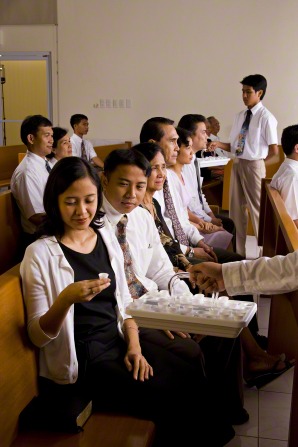
The Sacrament Can Help Us Become Holy - October 23, 2016

Julia J. presented a great overview of the talk "The Sacrament Can Help Us Become Holy" by Elder Peter F. Meurs from the October 2016 General Conference.


1) Prepare in advance
2) Arrive early
3) Sing and learn words from the words of the Sacrament hymn
4) Spiritually participate in the Sacrament Prayers
  • What are we willing to sacrifice?
  • We are promised to have his Spirit, how does that effect your life?
  • How do you stay engaged during the prayers?
The prayer concludes with a sublime invitation and promise: “That they may always have his Spirit to be with them” (Moroni 4:3).
Paul wrote, “The fruit of the Spirit is love, joy, peace, longsuffering, gentleness, goodness, faith, meekness, [and] temperance” (Galatians 5:22–23). Beautiful blessings and gifts are available to us as we keep our covenants. ("The Sacrament Can Help Us Become Holy")

5) Ponder and Remember Him as the Sacrament Emblems are passed
As the bread is passed, we may contemplate that in the ultimate act of love for us, the Savior took “upon him death, that he may loose the bands of death which bind his people” (Alma 7:12).
We may remember the glorious blessing of the Resurrection that “shall come to all, … both bond and free, both male and female, both the wicked and the righteous; and even there shall not so much as a hair of their heads be lost; but every thing shall be restored to its perfect frame” (Alma 11:44).
As the water is passed, we may remember the plea of the Savior:
“Behold, I, God, have suffered these things for all, that they might not suffer if they would repent; …
“Which suffering caused myself, even God, the greatest of all, to tremble because of pain, and to bleed at every pore, and to suffer both body and spirit—and would that I might not drink the bitter cup, and shrink” (D&C 19:16, 18).
We remember that He took “upon him [our] infirmities, that his bowels may be filled with mercy, according to the flesh, that he may know according to the flesh how to succor his people according to [our] infirmities” (Alma 7:12). ("The Sacrament Can Help Us Become Holy")
Self quiz:
As we consider our sacrament experience, we might ask ourselves:
  • What will I do this week to better prepare for the sacrament?
  • Could I contribute more to the reverence and revelation that can accompany the beginning of sacrament meeting?
  • What doctrine was taught in the sacrament hymn?
  • What did I hear and feel as I listened to the sacrament prayers?
  • What did I think about as the sacrament was passed?
Elder David A. Bednar taught: “The ordinance of the sacrament is a holy and repeated invitation to repent sincerely and to be renewed spiritually. The act of partaking of the sacrament, in and of itself, does not remit sins. But as we prepare conscientiously and participate in this holy ordinance with a broken heart and a contrite spirit, then the promise is that we may always have the Spirit of the Lord to be with us. And by the sanctifying power of the Holy Ghost as our constant companion, we can always retain a remission of our sins.” (David A. Bednar, “Always Retain a Remission of Your Sins,” )

Monday, October 17, 2016

Our Committment to God - October 16, 2016

Hikari led us in a discussion of the Chapter 19 Our Commitment to God.

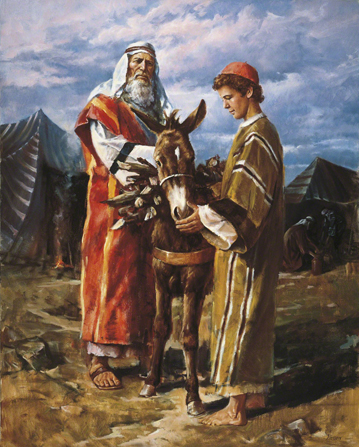
Abraham and Isaac (Genesis 22)
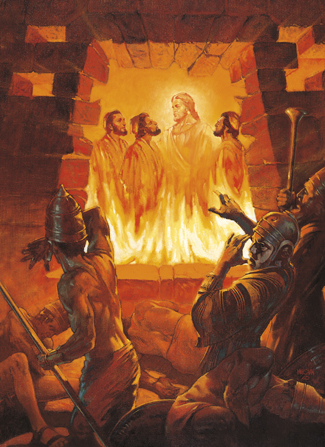
Shadrach, Meshach and Abed-nego in the furnace (Daniel 3)

“Today I finished most of my work at the office. Nearly all of the pending matters are completed. I was alone in the office today with the realization that my practice of law was now at an end. I made notes on a number of files and left them on the desk. … I had a sick feeling as I left the office. I have enjoyed the practice of law and it has been my life for the last number of years, but in spite of this I am pleased and happy to respond to the great call which has come to me in the Church.”2
Elder Hunter knew from personal experience that “submitting to our Father’s will is not always easy.”3 Nevertheless, he knew the importance of being fully committed to God. Concerning that commitment, he wrote: “Most people do not understand why persons of our religious faith respond to calls made to serve or the commitment we make to give our all. I have thoroughly enjoyed the practice of law, but this call that has come to me will far overshadow the pursuit of the profession or monetary gain.” (Our Commitment to God)

As I think of the blessings God has given us and the many beauties of the gospel of Jesus Christ, I am aware that along the way we are asked to make certain contributions in return, contributions of time or of money or of other resources. These are all valued and all necessary, but they do not constitute our full offering to God. (Our Commitment to God)
  • When or how do you evaluate your commitment?
For the families awaiting the coming of Christ in the Book of Mormon, "And it came to pass that they did make a great uproar throughout the land; and the people who believed began to be very sorrowful, lest by any means those things which had been spoken might not come to pass." (3 Nephi 1:7, emphasis added).  It's okay for us to have these moments when our commitment becomes more difficult, we need to move on with faith, pray for courage and an understanding of the plan of salvation for you.
When speaking to the multitudes, the Master said: “Not every one that saith unto me, Lord, Lord, shall enter into the kingdom of heaven; but he that doeth the will of my Father which is in heaven.” (Matt. 7:21.)
As I listen to these words, it seems to me that the Lord is saying, “Just because a person may acknowledge my authority or have a belief in my divine nature, or merely express faith in my teachings or the atoning sacrifice I made, does not mean he shall enter into the kingdom of heaven or attain a higher degree of exaltation.” By implication he is saying, “Belief alone is not sufficient.” Then he expressly adds, “… but he that doeth the will of my Father,” that is, he that works and prunes the vineyard that it may bring forth good fruit. (Our Commitment to God)
  •  Pick something new that makes you DO something to make you a Living Member.
Yes, men and women who turn their lives over to God will discover that He can make a lot more out of their lives than they can. He will deepen their joys, expand their vision, quicken their minds, strengthen their muscles, lift their spirits, multiply their blessings, increase their opportunities, comfort their souls, raise up friends, and pour out peace.  (Ezra Taft Benson)

Tuesday, September 27, 2016

Always Retain a Remission of Your Sins - September 25, 2016

Marguerite H. led us in a lovely review of Elder Bednar's talk "Always Retain a Remission of Your Sins" from last April's conference, with many gardener perspectives of how to become sanctified.
"The ordinances of salvation and exaltation administered in the Lord’s restored Church are far more than rituals or symbolic performances. Rather, they constitute authorized channels through which the blessings and powers of heaven can flow into our individual lives." ("Always Retain a Remission of Your Sins")
"The ordinances of baptism by immersion, the laying on of hands for the gift of the Holy Ghost, and the sacrament are not isolated and discrete events; rather, they are elements in an interrelated and additive pattern of redemptive progress. Each successive ordinance elevates and enlarges our spiritual purpose, desire, and performance. " ("Always Retain a Remission of Your Sins")
Sow to yourselves in righteousness,
reap in mercy;
break up your fallow ground:
for it is time to seek the Lord, till he come and rain righteousness upon you.
Hosea 10:12
  • What is it like to break up the fallow ground of our souls?
  • What is the 'digging bar' of the hard parts of our life?
  • How do you sow seeds of righteousness to move toward being holy?
  • How is the progress going in your life?  How does the weeding go?
Nevertheless they did fast and pray oft, and did wax stronger and stronger in their humility, and firmer and firmer in the faith of Christ, unto the filling their souls with joy and consolation, yea, even to the purifying and the sanctification of their hearts, which sanctification cometh because of their yielding their hearts unto God. Helaman 3:35
And the Lord shall guide thee continually, and satisfy thy soul in drought, and make fat thy bones: and thou shalt be like a watered garden, and like a spring of water, whose waters fail not.
Isaiah 58:11
Marguerite told the story of the efforts of Jenny Butchart to restore beauty to a quarry created for cement.  The resulting gardens are now famous, though the process was painstaking.

We all have quarries in our lives.  As we turn to the Savior and break up our fallow ground and sow the seeds of righteousness - we see a miraculous transformation in our lives.


Monday, September 12, 2016

Marriage—An Eternal Partnership : September 11, 2016

Colette T. presented thoughts from Chapter 16, Marriage—An Eternal Partnership from the Howard W. Hunter manual.

  • Marriage between a man and a woman is ordained of God and is intended to be eternal.
  • When deciding whom to marry, be patient, have faith, and stay worthy of receiving divine assistance.
  • No blessing, including that of eternal marriage and an eternal family, will be denied to any worthy individual. While it may take somewhat longer—perhaps even beyond this mortal life—for some to achieve this blessing, it will not be denied. …
  • Successful marriage requires our best efforts to live the principles of the gospel.
  • Husbands and wives should work together to strengthen the bonds of marriage.


Wednesday, August 24, 2016

The Sacrament of the Lord’s Supper - August 21, 2016

Alex B. taught our lesson using Chapter 15: The Sacrament of the Lord’s Supper from the Howard W. Hunter manual.


We discussed the importance and symbolism of the Passover: the lamb, the blood, the sacrifice.  Christ cleansed the temple and fed the five thousand on different Passovers and of course instituted the sacrament at the Last Supper.

"That is why every ordinance of the gospel focuses in one way or another on the atonement of the Lord Jesus Christ, and surely that is why this particular ordinance with all its symbolism and imagery comes to us more readily and more repeatedly than any other in our life. It comes in what has been called “the mostsacred, the most holy, of all the meetings of the Church” (Joseph Fielding Smith, Doctrines of Salvation, comp. Bruce R. McConkie, 3 vols., Salt Lake City: Bookcraft, 1954–56, 2:340)." (Elder Jeffrey R. Holland, "This Do in Remembrance of Me", October 1995)

A woman had been accidentally missed when the sacrament was passed. Right after the meeting she was invited into a classroom.
"A priesthood holder came in. He knelt down, blessed some bread, and handed her a piece. She ate it. He knelt down again and blessed some water and handed her a small cup. She drank it. Thereafter, Diane had two thoughts in rapid succession: First, “Oh, he [the priesthood holder] did this just for me.” And then, “Oh, He [the Savior] did this just for me.” Diane felt Heavenly Father’s love." ("That I Might Draw All Men unto Me", Elder Dale E. Renland, April 2016)
  • How do you know you are worthy to take the Sacrament?
“For whoso eateth and drinketh my flesh and blood unworthily eateth and drinketh damnation to his soul.” (3 Ne. 18:28–29.)
What does it mean to partake of the sacrament worthily? Or how do we know if we are unworthy?
If we desire to improve (which is to repent) and are not under priesthood restriction, then, in my opinion, we are worthy. (Elder John H. Groeberg, The Beauty and Importance of the Sacrament, October 1989)

Monday, August 8, 2016

A review of how David O. McKay changed the church - August 7, 2016

Colette discussed many stories from the life of President David O. McKay and noted that the Church changed from one that looked to the past to one that looked to the future.

He was determined to change the chapel experience of those who joined the Church outside of Utah, directing that chapels and temples be built closer to their own homes around the world.  So that they would grow where they were planted.

He also had an extraordinary personal secretary in Clare Middlemiss, regarded at the time as the most powerful woman in the Church.  She protected President McKay and kept meticulous records of his thoughts in multiple volumes of books.  She served in the otherwise male role for over 30 years.

Being Fast Sunday we also heard testimonies from Nanci, Alice and both Alisons.

Tuesday, July 26, 2016

Family Councils - July 24, 2016

Tina taught our lesson from the April General Conference talk "Family Councils" by Elder M. Russell Ballard.

She detailed the four kinds of councils Elder Ballard spoke about:
  1. Full Family Council (both parents and all children)*
  2. Executive Council (just parents)
  3. Limited Council (both parents and one child)
  4. One-on-one Councils (one parent and one child)
*this can also be applied to a roommate situation also

"Now, brothers and sisters, there was a time when the walls of our homes provided all the defense we needed against outside intrusions and influences. We locked the doors, closed the windows; we shut the gates; and we felt safe, secure, and protected in our own little refuge from the outside world.
Those days are now gone. The physical walls, doors, fences, and gates of our homes cannot prevent unseen invasion from the Internet, the Wi-Fi, the mobile phones, the networks. They can penetrate our homes with just a few clicks and keystrokes.
Fortunately, the Lord has provided a way to counter the invasion of negative technology that can distract us from spending quality time with each other. He has done this by providing the council system to strengthen, protect, safeguard, and nurture our most precious relationships.
Children desperately need parents willing to listen to them, and the family council can provide a time during which family members can learn to understand and love one another." ("Family Councils")
"My brothers and sisters, the irony of being parents is that we tend to get good at it after our children are grown." ("Family Councils")
  • How do you gather your families together for councils?

Tuesday, July 12, 2016

Come Back and Feast at the Table of the Lord

Colette T. led our thoughts today from Chapter 12 in the President Howard W. Hunter manual: Come Back and Feast at the Table of the Lord.

"Reach out to the less active and realize the joy that will come to you and those you help."

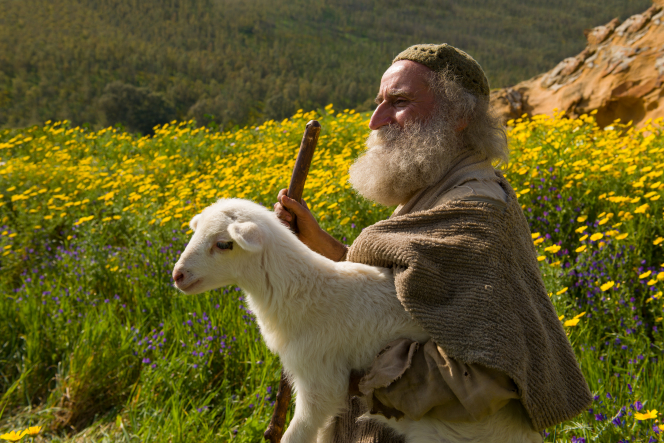
A group of sisters from the ward choir sang the Primary hymn, "Little Lambs So White and Fair."
 
1. Little lambs so white and fair
Are the Shepherd's constant care.
Now he leads their tender feet
Into pastures green and sweet.

2. Now they listen and obey,
Following where he leads the way.
Heav'nly Father, may we be
Thus obedient unto thee.

Words and music: Anon.

Monday, June 20, 2016

True Greatness - June 19, 2016

Sara G. led our thoughts from Chapter 11: True Greatness from the Howard W. Hunter manual.

Muhammad Ali, the legendary boxer, frequently said "I am the greatest!" His biography sits in many libraries.
Have you considered the question: Why do some people have books about them in the library?

The Lord does admonish us to write down our own personal story and to study those of our ancestors. "For the names of the righteous shall be written in the book of life, and unto them will I grant an inheritance at my right hand" (Alma 5:58)
The world’s definition of greatness is often misleading and can prompt damaging comparisons.
  • Are we affected by the world's definition of greatness?  Is popular put above valuable?

“Those things which we call extraordinary, remarkable, or unusual may make history, but they do not make real life.
“After all, to do well those things which God ordained to be the common lot of all mankind, is the truest greatness."

True greatness comes from persevering in the difficulties of life and from serving in ways that are often unnoticed.
True greatness requires consistent, small, and sometimes ordinary steps over a long period of time.

 … Giving consistent effort in the little things in day-to-day life leads to true greatness. Specifically, it is the thousands of little deeds and tasks of service and sacrifice that constitute the giving, or losing, of one’s life for others and for the Lord.

As President Joseph F. Smith has said, “Let us not be trying to substitute an artificial life for the true one.” (Juvenile Instructor, 15 Dec. 1905, p. 753.) Let us remember that doing the things that have been ordained by God to be important and needful and necessary, even though the world may view them as unimportant and insignificant, will eventually lead to true greatness.

The small things are significant. We remember not the amount offered by the Pharisee but the widow’s mite, not the power and strength of the Philistine army but the courage and conviction of David.

"What is my depth but layers and layers of shallow?"  e e cummings

Frequently it is the commonplace tasks we perform that have the greatest positive effect on the lives of others, as compared with the things that the world so often relates to greatness.

But all things must come to pass in their time.
Wherefore, be not weary in well-doing, for ye are laying the foundation of a great work. And out of small things proceedeth that which is great. (Doctrine and Covenants 64:32-33)

To Be of Use by Marge Piercy

The people I love the best
jump into work head first
without dallying in the shallows
and swim off with sure strokes almost out of sight.
They seem to become natives of that element,
the black sleek heads of seals
bouncing like half-submerged balls.

I love people who harness themselves, an ox to a heavy cart,
who pull like water buffalo, with massive patience,
who strain in the mud and the muck to move things forward,
who do what has to be done, again and again.

I want to be with people who submerge
in the task, who go into the fields to harvest
and work in a row and pass the bags along,
who are not parlor generals and field deserters
but move in a common rhythm
when the food must come in or the fire be put out.

The work of the world is common as mud.
Botched, it smears the hands, crumbles to dust.
But the thing worth doing well done
has a shape that satisfies, clean and evident.
Greek amphoras for wine or oil,
Hopi vases that held corn, are put in museums
but you know they were made to be used.
The pitcher cries for water to carry
and a person for work that is real.

The Scriptures—The Most Profitable of All Study

Tina D. taught our lesson today from Chapter 10: The Scriptures—The Most Profitable of All Study in the Howard W. Hunter manual.


Video of the story of Jairus


Living with Purpose and Real Intent

Tuesday, May 31, 2016

Developing the Love of Christ: Rescuing Lost Sheep

Bishop M. led a discussion around another aspect of our ward theme, Developing the Love of Christ, by using the parable of the lost sheep.


  • How are we using our time outside of church to practice True Christianity?
Matt S. spoke about a few ideas specifically toward rescuing the youth.  Find out and support their events, invite them to camp outs or your family gatherings.  Include them in what you do and discover what they are interested in.

Bishop M. then shared the many people who had helped rescue him along his way: his mom, his bishop, his home teacher, his mission president and his stake president.
  • Who rescued you?
When searching for who to help the following video gives proof that they are all around and all of us.

  • What are we going to do differently to rescue those in need of aid?

Monday, May 16, 2016

The Law of Tithing - May 15, 2016

Rebecca J. gave a spiritual lesson on the observance of tithing from the Howard W. Hunter manual.


The payment of tithing strengthens faith, increases spirituality and spiritual capacity, and solidifies testimony. It gives the satisfaction of knowing one is complying with the will of the Lord. (Howard W. Hunter, The Law of Tithing)
  • Have you noticed blessings in your life specifically from paying tithing?
In 2 Samuel 24:18–25 we read that David would not make an offering unto the Lord of that which cost him nothing. He no doubt reasoned that unless the gift cost the giver something of value, it was not fit or appropriate to be an offering for the Lord. (Howard W. Hunter, The Law of Tithing)
“A religion that does not require the sacrifice of all things never has power sufficient to produce the faith necessary unto life and salvation; for, from the first existence of man, the faith necessary unto the enjoyment of life and salvation never could be obtained without the sacrifice of all earthly things. It was through this sacrifice, and this only, that God has ordained that men should enjoy eternal life” (Joseph Smith, Lectures on Faith, 69).
  • How do you feel about paying tithing?  Whether or not you do pay it, do you want to pay it?
If tithing is a gift, we could give whatever we please, when we please, or make no gift at all. It would place our Heavenly Father in the very same category as the street beggar to whom we might toss a coin in passing. The Lord has established the law of tithing, and because it is his law, it becomes our obligation to observe it if we love him and have a desire to keep his commandments and receive his blessings. In this way it becomes a debt. (Howard W. Hunter, The Law of Tithing)

Tuesday, May 3, 2016

Taking the Gospel to All the World - May 1, 2016

Miriam D.  led our discussion using Chapter 8: Taking the Gospel to All the World from the Howard W. Hunter manual.


It is in understanding and accepting this universal fatherhood of God that all human beings can best appreciate God’s concern for them and their relationship to each other. This is a message of life and love that strikes squarely against all stifling traditions based on race, language, economic or political standing, educational rank, or cultural background, for we are all of the same spiritual descent. We have a divine pedigree; every person is a spiritual child of God.
In this gospel view there is no room for a contracted, narrow, or prejudicial view. The Prophet Joseph Smith said: “Love is one of the chief characteristics of Deity, and ought to be manifested by those who aspire to be the sons of God. A man filled with the love of God, is not content with blessing his family alone, but ranges through the whole world, anxious to bless the whole human race.” (Taking the Gospel to All the World)

“The purpose of the gospel of Jesus Christ is to bring about love, unity, and brotherhood of the highest order,” he said. (Taking the Gospel to All the World)

Miriam brought up a quote from a book that saw deep feelings emerge as a friendship grew between a successful art dealer and a homeless man.
“You was the onlyest person that looked past my skin and past my meanness and saw that there was somebody on the inside worth savin...We all has more in common than we think. You stood up with courage and faced me when I was dangerous, and it changed my life. You loved me for who I was on the inside, the person God meant for me to be, the one that had just gotten lost for a while on some ugly roads in life.”
Ron Hall, Same Kind of Different as Me

We need to battle the 'walls' we build in our own mind that slow us in sharing the gospel: the comfort wall, financial wall, grandchildren wall, health wall, lack of self-confidence wall, self-satisfied wall, transgression wall, or the walls of fear, doubt, or complacency.

We heard from the sister missionaries serving in our ward about how we just need to open our mouths and show true caring for others that will open the door to sharing the gospel.  Sinclaire also told of a success story with inviting people - even those who seem disinterested - to hear the gospel message.

Monday, April 18, 2016

Continuous Revelation through Living Prophets - April 17, 2016

Colette gave us an original presentation of the lesson as the host of Late Night with Ginny Fallon complete with a humorous opening monologue and applause breaks.

She hosted 3 guests who answered the question:
  • When you were a missionary, what did you tell people that was unique about our Church?
First up was faux author of a book entitled "The Bishop's Wife," Andrea.  She served in France and said that she often taught that we have a living prophet and only he can receive revelation for the entire Church from Christ who is the head of the Church.

Only the President of the Church has the right to receive revelations for the entire Church or to give official interpretations of the scriptures or the doctrines of the Church:
“No one shall be appointed to receive commandments and revelations in this church excepting [the President of the Church], for he receiveth them even as Moses” (D&C 28:2). (President Howard W. Hunter Continuous Revelation through Living Prophets)
Next up was faux host of the TV show "First Time Moms," Lanae who served in Winnipeg, Canada. She would teach people about the eternal nature of the plan of happiness and about the preexistance.

Finally, our recently returned Sinclaire was the faux star of the movie "On Trial in Taiwan." Temples and the Book of Mormon stood out as powerful doctrines that recurred in Taiwan.

We who are met here today [in general conference] claim a special, unique knowledge of the Savior’s gospel. Most striking of all, to those who first became acquainted with us, is our declaration to the world that we are guided by a living prophet of God—one who communicates with, is inspired by, and receives revelation from the Lord. (President Howard W. Hunter Continuous Revelation through Living Prophets)

Thanks for the entertaining and enlightening lesson 'Ginny', we'll 'stay tuned' for more!

Monday, March 21, 2016

Joseph Smith, Prophet of the Restoration: March 20, 2016

Megan J. lead us through a discussion of chapter 5 Joseph Smith, Prophet of the Restoration from the Howard W. Hunter manual.

  • What do you KNOW about the Joseph Smith?
  • How does what you know bring you closer to Christ and His Gospel?

[Elder] John A. Widtsoe defines a prophet as a teacher—one who expounds truth. He teaches truth as revealed by the Lord to man, and under inspiration explains it to the understanding of the people. The word “prophet” is often used to designate one who receives revelation and direction from the Lord. Many have thought that a prophet is essentially a foreteller of future events and happenings, but this is only one of the many functions of a prophet. He is a spokesman for the Lord.

A seer is one who sees. This does not mean that he sees through his natural eyes but rather through spiritual eyes. The seeric gift is a supernatural endowment. Joseph was like unto Moses, the ancient seer, and Moses saw God face to face, but he explains how he saw him in these words:

“But now mine own eyes have beheld God; but not my natural, but my spiritual eyes, for my natural eyes could not have beheld; for I should have withered and died in his presence; but his glory was upon me; and I beheld his face, for I was transfigured before him” (Moses 1:11).

A revelation makes known something unknown or which has been previously known by man and taken from his memory. Always the revelation deals with truth, and always it comes with the divine stamp of approval. Revelation is received in various ways, but it always presupposes that the revelator has so lived and conducted himself as to be in tune or harmony with the divine spirit of revelation, the spirit of truth, and therefore capable of receiving divine messages.   (Joseph Smith, Prophet of the Restoration)
  • What blessings have come to you through Joseph Smith?
  • What can we learn from his example?