Wednesday, August 24, 2016

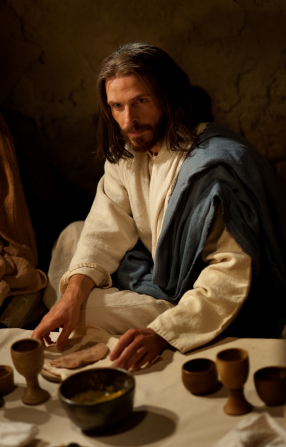
The Sacrament of the Lord’s Supper - August 21, 2016

Alex B. taught our lesson using Chapter 15: The Sacrament of the Lord’s Supper from the Howard W. Hunter manual.


We discussed the importance and symbolism of the Passover: the lamb, the blood, the sacrifice.  Christ cleansed the temple and fed the five thousand on different Passovers and of course instituted the sacrament at the Last Supper.

"That is why every ordinance of the gospel focuses in one way or another on the atonement of the Lord Jesus Christ, and surely that is why this particular ordinance with all its symbolism and imagery comes to us more readily and more repeatedly than any other in our life. It comes in what has been called “the mostsacred, the most holy, of all the meetings of the Church” (Joseph Fielding Smith, Doctrines of Salvation, comp. Bruce R. McConkie, 3 vols., Salt Lake City: Bookcraft, 1954–56, 2:340)." (Elder Jeffrey R. Holland, "This Do in Remembrance of Me", October 1995)

A woman had been accidentally missed when the sacrament was passed. Right after the meeting she was invited into a classroom.
"A priesthood holder came in. He knelt down, blessed some bread, and handed her a piece. She ate it. He knelt down again and blessed some water and handed her a small cup. She drank it. Thereafter, Diane had two thoughts in rapid succession: First, “Oh, he [the priesthood holder] did this just for me.” And then, “Oh, He [the Savior] did this just for me.” Diane felt Heavenly Father’s love." ("That I Might Draw All Men unto Me", Elder Dale E. Renland, April 2016)
  • How do you know you are worthy to take the Sacrament?
“For whoso eateth and drinketh my flesh and blood unworthily eateth and drinketh damnation to his soul.” (3 Ne. 18:28–29.)
What does it mean to partake of the sacrament worthily? Or how do we know if we are unworthy?
If we desire to improve (which is to repent) and are not under priesthood restriction, then, in my opinion, we are worthy. (Elder John H. Groeberg, The Beauty and Importance of the Sacrament, October 1989)

Monday, August 8, 2016

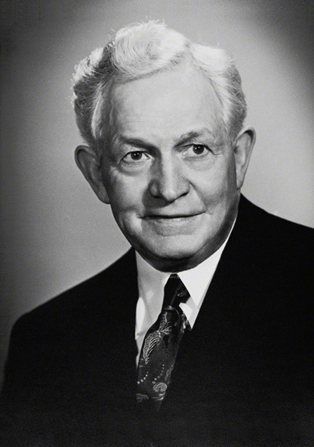
A review of how David O. McKay changed the church - August 7, 2016

Colette discussed many stories from the life of President David O. McKay and noted that the Church changed from one that looked to the past to one that looked to the future.

He was determined to change the chapel experience of those who joined the Church outside of Utah, directing that chapels and temples be built closer to their own homes around the world.  So that they would grow where they were planted.

He also had an extraordinary personal secretary in Clare Middlemiss, regarded at the time as the most powerful woman in the Church.  She protected President McKay and kept meticulous records of his thoughts in multiple volumes of books.  She served in the otherwise male role for over 30 years.

Being Fast Sunday we also heard testimonies from Nanci, Alice and both Alisons.

Tuesday, July 26, 2016

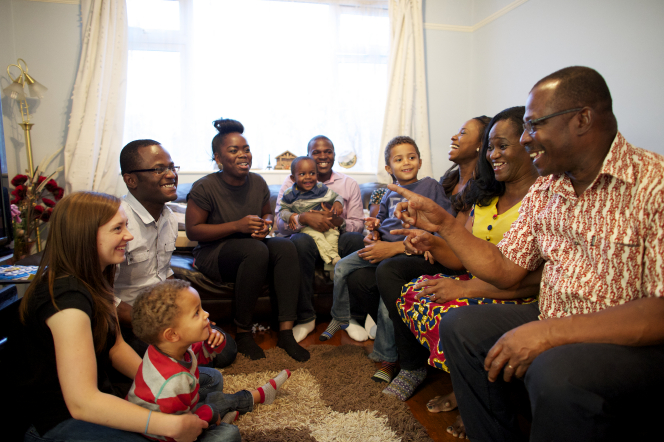
Family Councils - July 24, 2016

Tina taught our lesson from the April General Conference talk "Family Councils" by Elder M. Russell Ballard.

She detailed the four kinds of councils Elder Ballard spoke about:
  1. Full Family Council (both parents and all children)*
  2. Executive Council (just parents)
  3. Limited Council (both parents and one child)
  4. One-on-one Councils (one parent and one child)
*this can also be applied to a roommate situation also

"Now, brothers and sisters, there was a time when the walls of our homes provided all the defense we needed against outside intrusions and influences. We locked the doors, closed the windows; we shut the gates; and we felt safe, secure, and protected in our own little refuge from the outside world.
Those days are now gone. The physical walls, doors, fences, and gates of our homes cannot prevent unseen invasion from the Internet, the Wi-Fi, the mobile phones, the networks. They can penetrate our homes with just a few clicks and keystrokes.
Fortunately, the Lord has provided a way to counter the invasion of negative technology that can distract us from spending quality time with each other. He has done this by providing the council system to strengthen, protect, safeguard, and nurture our most precious relationships.
Children desperately need parents willing to listen to them, and the family council can provide a time during which family members can learn to understand and love one another." ("Family Councils")
"My brothers and sisters, the irony of being parents is that we tend to get good at it after our children are grown." ("Family Councils")
  • How do you gather your families together for councils?