Suzi led our discussion of the April 2017 General Conference talks "Trust in the Lord and Lean Not" by Bonnie H. Cordon and "Stand Up Inside and Be All In" by Elder Gary B. Sabin
Leaps of Faith
There are many times in life when we must trust in the Lord's plan when we need to jump. We may have doubts and fear but we must move forward trusting we will be supported.
Elder Sabin says the Lord requires "our whole heart! When we are baptized, we are fully immersed as a symbol of our promise to fully follow the Savior, not half-heartedly. When we are fully committed and “all in,” heaven shakes for our good. When we are lukewarm or only partially committed, we lose out on some of heaven’s choicest blessings."
Elder Sabin warns: "When we are complacent with our covenants, we are complicit with the consequences."
Sister Cordon suggests way we can trust in the Lord:
*Feast on the words of christ
*Come to know the Lord and trust in him through prayer
*Serve others
Sisters were able to share many sacred stories of times when they had to trust in the Lord and were supported
Sunday, June 4, 2017

Sunday, May 28, 2017
"The Language of the Gospel" by Elder Valeri V. Cordon- May 28, 2017
Sister Miller led our discussion using the April 2017 General Conference talk by Elder Valeri V. Cordon "The Language of the Gospel"
Learning a New Language-
The question was posed- What has helped you learn a new language?
*Practice
*Immersion
*Studying every day
*Relying on the spirit
*Reading the Book of Mormon in another language
*Try no matter what and don't give up
What has helped you retain the second language?
*You have to continually use it and speak it or you lose it
*Without continual practical experience, it doesn't stick.
Learning a new language is not easy, but worth it! We can liken learning a new language to learning and retaining the language of the gospel. How do you learn the language of the gospel?
Elder Cordon relates how he noticed when he moved with his family to the United States that many families lose their native language by the third generation. He does not want us to slowly lose the language of the gospel through the generations.
What do we need to do to retain the language of our Heavenly Father and the feelings and testimony we had when we came to the gospel?
Elder Cordon suggests we start with the basics!
1. Be more diligent and concerned at home
2. Strong Modeling in the home
3. Traditions- Avoid traditions that pull you away from the gospel and focus on traditions that help you draw closer to Christ
What keeps us strong in the gospel everyday?
-Pray and read from the scriptures (even listen to them on audio if you are busy)
-Live the gospel daily
-Read the Book of Mormon every day
-Exercise an increase of love when dealing with your children and try to be a Christ-like example so the spirit can be stronger in your home
-Share the gospel with others continually
Elder Cordon reminds us to have family home evening regularly so that your children can have a foundation in the gospel and receive the teachings they need to build their testimony
"Powerful teaching is extremely important to preserve the gospel in our families, and it requires diligence and effort." -Elder Cordon
Learning a New Language-
The question was posed- What has helped you learn a new language?
*Practice
*Immersion
*Studying every day
*Relying on the spirit
*Reading the Book of Mormon in another language
*Try no matter what and don't give up
What has helped you retain the second language?
*You have to continually use it and speak it or you lose it
*Without continual practical experience, it doesn't stick.
Learning a new language is not easy, but worth it! We can liken learning a new language to learning and retaining the language of the gospel. How do you learn the language of the gospel?
Elder Cordon relates how he noticed when he moved with his family to the United States that many families lose their native language by the third generation. He does not want us to slowly lose the language of the gospel through the generations.
What do we need to do to retain the language of our Heavenly Father and the feelings and testimony we had when we came to the gospel?
Elder Cordon suggests we start with the basics!
1. Be more diligent and concerned at home
2. Strong Modeling in the home
3. Traditions- Avoid traditions that pull you away from the gospel and focus on traditions that help you draw closer to Christ
What keeps us strong in the gospel everyday?
-Pray and read from the scriptures (even listen to them on audio if you are busy)
-Live the gospel daily
-Read the Book of Mormon every day
-Exercise an increase of love when dealing with your children and try to be a Christ-like example so the spirit can be stronger in your home
-Share the gospel with others continually
Elder Cordon reminds us to have family home evening regularly so that your children can have a foundation in the gospel and receive the teachings they need to build their testimony
"Powerful teaching is extremely important to preserve the gospel in our families, and it requires diligence and effort." -Elder Cordon
Wednesday, April 26, 2017
Parenting Series Notes 4/18: “Positive and non-confrontational discipline for all ages: avoiding daily battles, dealing with anger and finding alternatives to punishment” by Jen W.
Positive Discipline - Reducing drama, connecting and teaching your children
True Principles:
- Elder James Faust: In my opinion, the teaching, rearing, and training of children requires more intelligence, intuitive understanding, humility, strength, wisdom, spirituality, perseverance, and hard work than any other challenge we might have in life. This is especially so when moral foundations of honor and decency are eroding around us. To have successful homes, values must be taught, and there must be rules, there must be standards, and there must be absolutes. Every child is different and unique. I do not know who is wise enough to say what discipline is too harsh or what is too lenient except the parents of the children themselves, who love them most. It is a matter of prayerful discernment for the parents. Certainly the overarching and undergirding principle is that the discipline of children must be motivated more by love than by punishment.
- D&C 121:
- 41 No power or influence can or ought to be maintained by virtue of the priesthood, only by persuasion, by long-suffering, by gentleness and meekness, and by love unfeigned;
42 By kindness, and pure knowledge, which shall greatly enlarge the soul without hypocrisy, and without guile—
43 Reproving betimes with sharpness, when moved upon by the Holy Ghost; and then showing forth afterwards an increase of love toward him whom thou hast reproved, lest he esteem thee to be his enemy;
God’s Pattern of Discipline
- Persuasion
- Long-Suffering
- Gentleness
- Meekness
- Sincere Love (love unfeigned)
- Kindness
- Reprimand:
- When directed by Spirit
- Must be followed by increase of love
- Brigham Young counseled, “If you are ever called upon to chasten a person, never chasten beyond the balm you have within you to bind up.”
Application of Principles: Positive Discipline
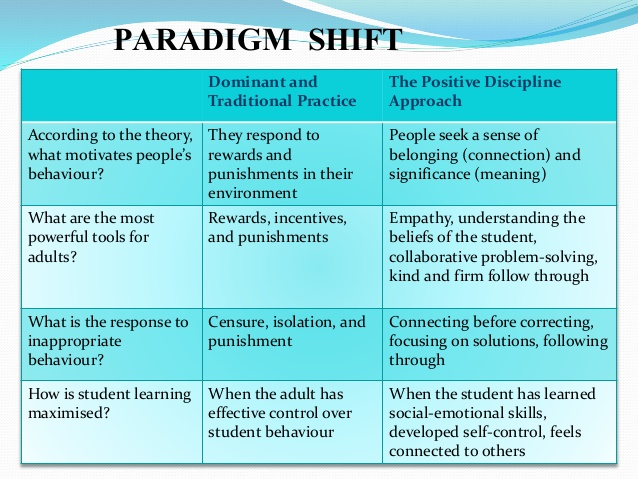
- Positive Discipline IS:
- Based on Adlerian psychology
- A specific philosophy/method
- Awareness of child’s brain devleopment
- Focuses on behavior AND belief behind the behavior
- Collection of methods to effectively teach kids how to be competent, capable adults
- “Children do better when they feel better.”
- Positive Discipline is NOT:
- Permissive parenting
- Praising child for everything
- “Children do better after they feel worse.”
What kind of home are you building?
- Walls: limits, consequences
- Foundation: belonging and significance
- Roof: connection, dignity and respect
- Windows and doors: see inside, ask questions
Foundation: Alderian Psychology
Alfred Adler, Viennese medical doctor, late 1800s
- Primary goal of all people is TO BELONG and TO FEEL SIGNIFICANT and people make mistakes in their efforts to overcome a feeling of inferiority. He believed the best way to change behavior is from the inside out (internal motivators).
- Everyone should be treated with dignity and respect.
- All behavior is goal oriented
- A misbehaving child is a discouraged child
Discussion:
- Belonging
- What do people do to make you feel you belong in a group?
- What can others do to make you feel you don’t belong in a group?
- Significance
- What makes you feel significant in a group?
- What can people do to make you feel insignificant in a group?
- Application
- How do you know your children feel they belong? What behaviors do they display?
- How can you tell if your children feel significant? What behaviors do they display?
What lesson do I want to teach right now?
“Goal of discipline is NOT to give a consequence. It’s to teach a lesson -- whether it’s about self-control, the importance of sharing, acting responsibly or anything else.” (No-drama Discipline)
Careful of “piggybacking” lessons . . . (e.g., you want your child to do homework, which reminds you that he also hasn’t cleaned his room, or practiced his piano, etc. etc.)
How can I best teach this lesson?
- Consider child’s age & developmental stage
- Emotion Coaching
- Identify/Label Emotion
- Normalize the Emotion
- Feel the Emotion.
- Problem Solve.
- Move on.
- Connect
- Redirect
Walls: Limits and Consequences
- Kind & Firm
- I know you don’t want to stop playing, and it’s time for dinner.
- I know you’d rather play with lego than do your homework, and your homework needs to be done first.
- Decide what you will do & notify in advance
- Family Meetings
- Training
- Limited choices
Roof: Connection
- Communicate/Comfort - Validate - Listen - Reflect
Favorite Parenting Tools:
- Talk less. Smile More.
- 7 words.
- Try again.
- Yes? Instead of What?
- Describe.
Pre-teens & Teens:
- Outburst is usually result of a lack of connection in some area of their life
- Sometimes, just be near. Let them be “alone” next to you.
Positive Discipline Resources
Websites/Online Parenting Classes
Jane Nelson
Positivediscipline.com
Amy McCready
Positiveparentingsolutions.com
Dan Siegel
Youtube
Free seminars (Amy McCready)
Books:
How to Talk So Kids Will Listen & Listen So kids Will Talk by Adele Faber
Positive Discipline Parenting Tools Workbook, by Jane Nelsen
No-Drama Discipline by Daniel Siegel and Tina Bryson (and the WORKBOOK)
Peaceful Parent, Happy Kids: How to Stop Yelling and Start Connecting by Dr. Laura Markham
Which tool to use?
With parenting, the “what” is usually easier to figure out than the “how,” which requires ability to use different approaches.
It’s helpful to have different types of tools in your parenting toolbox. Positive discipline and methods we’ve discussed tonight are some tools -- Love & Logic; 1, 2, 3 Magic; Parent Guru; are other methods that work for people.
Conclusion:
From Pres Eyring:
Unity is necessary for us to have the Spirit in our class and in our family. But you know from experience, as I do, that such loving unity is hard to maintain. It takes having the Holy Ghost as a companion to open our eyes and temper our feelings.
I remember once a seven- or eight-year-old son of ours jumping on his bed hard enough that I thought it might break. I felt a flash of frustration, and I moved quickly to set my house in order. I grabbed my son by his little shoulders and lifted him up to where our eyes met.
The Spirit put words into my mind. It seemed a quiet voice, but it pierced to my heart: “You are holding a great person.” I gently set him back on the bed and apologized.
Now he has become the great man the Holy Ghost let me see 40 years ago. I am eternally grateful that the Lord rescued me from my unkind feelings by sending the Holy Ghost to let me see a child of God as He saw him.
Galatians 5:22-23
But the fruit of the Spirit is love, joy, peace, longsuffering, gentleness, goodness, faith, meekness and temperance.
Subscribe to:
Posts (Atom)